Shared living describes the setting you live in. Within that setting, Specialist Disability Accommodation (SDA) funds the home, and Supported Independent Living (SIL) or Individualised Living Options (ILO) funds the support you receive there.
Your National Disability Insurance Scheme (NDIS) plan funds the parts that make shared living work, rather than including a line item called “shared living”.
Many people in shared living have both SDA and SIL or ILO funding. Starting from your needs helps you understand which funding applies.
Keeping housing and support separate gives you stronger safeguards, clearer accountability and greater autonomy.
In an Enliven home, tenants who share supports decide together how those supports work through the independently facilitated Choice Collective.
Understanding how shared living and support fit together makes it easier to plan your home and your support. If you’ve been reading about shared living, you’ve probably come across a lot of acronyms, like SDA, SIL and ILO. They’re often explained side by side, with a note on which covers support and which covers the home.
It also helps to know where shared living fits. Shared living is the home itself, the setting where you live, and the funding types operate inside that setting.
This guide explains how shared living and support fit together, why keeping them separate matters, and how decisions about your support get made once you’re living in a shared home. If you’re new to the topic, our complete guide to shared living is a good place to start.
What is shared living?
The big picture on shared living, if you’re new to the topic.
Seeing shared living as a setting makes the funding easier to understand.
Shared living is a home you share with one or more housemates. Your NDIS plan includes funding for the things that make that home work. There are two main parts, and each does a different job.
SDABricks and mortar
Specialist Disability Accommodation
●Funds the physical dwelling and its maintenance
●Paid directly to your housing provider
●Tied to a design category and an enrolled property
SILPeople and support
Supported Independent Living
●Funds paid personal support and daily living help
●Covers tasks like household chores and personal care
●Delivered by your support provider, not your landlord
Shared living, SDA and SIL or ILO each do a different job, and together they make a shared living arrangement work.
If you’d like the funding definitions side by side, our guide to the difference between SIL and SDA sets them out. This article explains how they work together once you’re living in a shared home.
Which one applies to you?
Your support needs decide which funding applies, and often more than one does.
You might have SDA funding because you need a purpose-built, accessible home. You might have SIL or ILO funding because you need support to live day to day. Many people in shared living have both, working together, and some have one or the other.
The most useful place to start is with what you need day to day.
Start from what you need
And let the funding follow
Your need
Points toward
Do you need an accessible home built to a specific standard?
SDA
Do you need support for daily activities?
Funded support like SIL or ILO
Do you need both?
Many people do
Starting from your goals and daily needs helps the right funding follow. If you’re working out whether you qualify for a shared setting, our guide to shared living eligibility explains how the National Disability Insurance Agency (NDIA) makes that decision.
Why housing and support should stay separate
Keeping your housing and support with separate providers gives you more control over both.
Some arrangements have the same organisation providing your home and your support. When one provider manages both, a concern about your support goes to the same organisation that manages your housing, which can make it uncomfortable to raise.
One providerSame organisation
Housing and support from the same organisation
●Your home and support are managed by the same organisation
●Concerns about either go to the same provider
●Changing your support may affect your housing
EnlivenKept separate
Your home and your support come from different places
●Housing and support remain clearly separated
●You can raise concerns about your support with confidence
●One of Enliven Housing’s guiding principles
Keeping housing and support clearly separated is one of Enliven Housing’s guiding principles. When your home and your support come from different places, you get three benefits.
Stronger safeguards
Responsibility is shared across more than one provider.
Clearer accountability
Everyone knows who’s responsible for what.
Greater autonomy
You can change your support without affecting your home, or change your home and keep your support.
At Enliven Housing, this is built into how we operate. As a housing provider, we focus on the home, the tenancy and your living experience, and we don’t provide support services. This means our role stays independent of which support provider you choose.
✓We’re a housing provider
✓We focus on the home, the tenancy and your living experience
✓We don’t provide support services
✓Our role is independent of your choice of support provider
Your tenancy is never conditional on who supports you.
Our Model
Why we separate housing from support
You can read more about why we separate housing from support in our model.
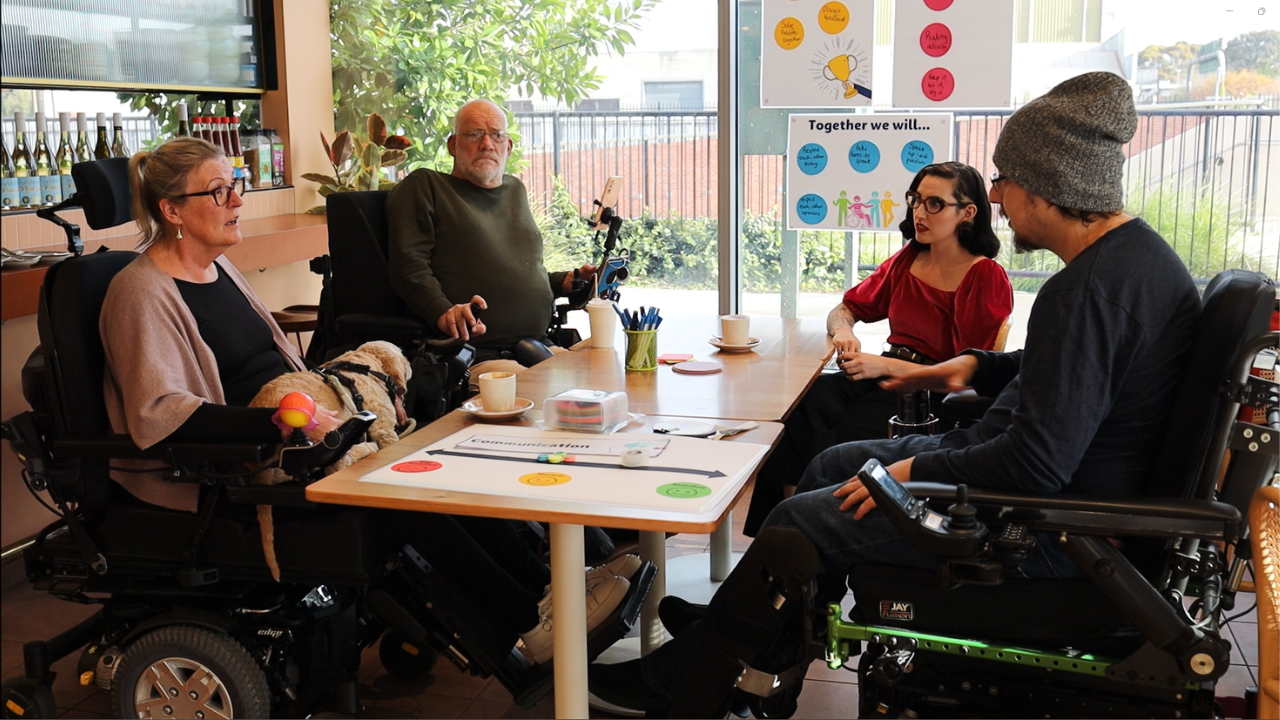
In an Enliven home, you and your housemates decide together how your shared support works.
Some supports are often shared between housemates, particularly overnight support. This leads to a few common questions:
?Who decides how it works?
?Who chooses the provider?
?Who decides what good support looks like?
At Enliven Housing, the Choice Collective answers these questions. The Choice Collective is a group made up of the tenants who share supports in a home or community. Together, they make the decisions about their shared support: what’s shared, how it’s delivered and who delivers it.
The Choice Collective decides
✓What’s shared
✓How it’s delivered
✓Who delivers it
✓Changes to shared support, at any time
Independently facilitated
✓Through Enliven Community, a separate organisation to Enliven Housing
✓The Facilitator doesn’t work for the housing or support provider
✓Tenants can speak freely and give open feedback
The Choice Collective is independently facilitated through Enliven Community, a separate organisation to Enliven Housing. Because the Facilitator doesn’t work for the housing provider or the support provider, tenants can speak freely, raise concerns and give open feedback with confidence.
This means your shared supports are shaped by you and your housemates. The Choice Collective can also request changes to how shared support is delivered at any time, so any issues can be raised and addressed as they come up.
Choice Collective
You can learn more about how the Choice Collective works.
Here’s how the pieces fit together in a shared home.
1
The home
Imagine a shared home with two housemates. The home is a purpose-built, accessible property, funded through SDA and managed by a housing provider like Enliven. Both housemates have their own private bedroom and share the kitchen, living and outdoor spaces.
2
The support
Inside that home, each housemate has support funded through their own NDIS plan. They share overnight support, which makes their funding go further, while keeping their own individual daytime supports tailored to their goals.
3
The decisions
The housemates make decisions about their shared overnight support together through the Choice Collective, with an independent facilitator helping them agree on what they want and how it should work. If one housemate is unhappy with the support provider, the Collective can review it and request a change.
In this example, the home stays the same while the support adjusts to what the housemates need. Because their housing and support come from different providers, they keep control over both.