The SDA Pricing Arrangements set the maximum price providers can charge for SDA under the National Disability Insurance Scheme (NDIS).
The SDA Pricing Arrangements determine the price limits based on both the design category and the dwelling type.
New Build typically has the highest SDA cost, while Legacy Stock is usually the lowest.
SDA pricing is generally higher when fewer residents share a home.
SDA with an OOA room will have a higher cost compared to those without.
Your RRC is capped at 25% of your Disability Support Pension, plus 25% of your Pension Supplement, plus 100% of your Commonwealth Rent Assistance.
SDA price limits are updated by the NDIA each year, usually from 1 July.
The Specialist Disability Accommodation (SDA) Pricing Arrangements help set fair and consistent price limits for the funding of different types of SDA homes. In this article, we’ll break down what these are, how they’re set and how they affect your funding and housing options.
Understanding SDA Pricing Arrangements
The SDA Pricing Arrangements set the maximum price providers can charge for SDA under the National Disability Insurance Scheme (NDIS). It outlines the rules and limits that both providers and participants must follow.
These price arrangements are set by the National Disability Insurance Agency (NDIA). It was created to ensure that the price SDA providers charge accurately reflects the costs of delivering the service. It also ensures you receive the right supports.
When allocating funding, the NDIA will use the SDA Pricing Arrangements as a guide to determine the appropriate amount you need to access the services and housing that suit you.
What Factors Influence SDA Pricing?
SDA pricing is shaped by a range of factors outlined in the SDA Pricing Arrangements. Below, we break down some of the key elements that can impact the cost:
SDA Pricing for Design Category and Dwelling Type
The SDA Pricing Arrangements determine the price limits based on both the design category and the dwelling type.
There are four categories of SDA:
IL
Sensory, intellectual or cognitive impairment
Improved Liveability
IL homes provide a reasonable level of physical access plus additional features that promote safety, comfort and easy wayfinding. Doorways, handles and switches are clearly visible so moving through the home is seamless.
Key design features
●All corridors and passageways must be at least 120cm wide
●Luminous contrast of at least 30% between two surfaces (e.g. door leaf and door frame)
FA homes focus on a high level of physical access. They are step-free throughout and include modifications that make everyday movement and use straightforward — particularly beneficial for wheelchair users.
High physical impairment with critical support needs
High Physical Support
High Physical Support (HPS) is the most comprehensive SDA design category built for participants with higher support needs. This category is most compatible if you often require additional support and specialised equipment for day-to-day activities.
Under the SDA Design Standard, the Robust design category addresses the needs of participants who may present with complex behaviours or psychosocial disability, such as Autism or mental health conditions. This design category ensures that homes are built to support not only participant safety and comfort but also the long-term durability of the property.
Key design features
●Kitchen benchtop and cabinetry must be made of robust materials
●The main bedroom must be sound-insulated
●Windows must be made of shatter-free material such as laminated glass or polycarbonate
●Fittings and fixtures such as sink tap must be durable and vandal proof
Each category must meet the design features outlined in the SDA Design Standard. For example, HPS SDA homes must include features like wider doorways (at least 95cm). The NDIA will assess how these design features reduce your need for daily support. Your SDA funding amount will vary depending on which category you’re eligible for.
Each dwelling type has its own pricing limits, influenced by other key factors as well.
New Build, Existing Stock or Legacy Stock SDA
Another key factor that influences SDA Pricing Arrangements is the type of SDA home. More specifically, the cost of SDA can vary depending on whether the home is classified as a New Build, Existing Stock or Legacy Stock. Each type has specific requirements based on when it was built, how many people it accommodates and how well it meets SDA design standards. The table below outlines some of the key differences between each SDA type.
Criteria
Certificate of Occupancy
How Many People Can Live There?
What’s Needed to Be Enrolled?
New Build
The building must have been approved for use (got its occupancy certificate) on or after 1 April 2016.
Up to 5 people, or the person with disability and their immediate family.
Must meet strict design standards and be assessed by a certified SDA assessor.
Existing Stock
Not issued as New Build; must have been used for SDA between 1 July 2013 and 1 December 2016.
Up to 5 people or the person with disability and their immediate family.
Must have been used for disability accommodation in the past and meet basic design standards.
Legacy Stock
Same as Existing Stock – not issued as New Build; must meet additional conditions for higher resident numbers.
More than 5 people can live there.
Must have been used for disability accommodation in the past and meet basic design standards.
New Build typically has the highest SDA cost, while Legacy Stock is usually the lowest. This is mainly due to differences in design, accessibility and safety requirements. New Build SDA must comply with the current SDA Design Standard, which includes more complex features, whereas Legacy Stock only needs to meet basic, more relaxed standards.
SDA Cost by Location
Location is another factor that’s considered in the SDA price guide. The SDA Pricing Arrangements set different price limits based on regions defined by the Australian Bureau of Statistics (ABS). In general, SDA prices tend to be higher in remote areas than in capital cities or regional centres. This is because the NDIA recognises the additional costs involved in delivering housing and support in more isolated locations.
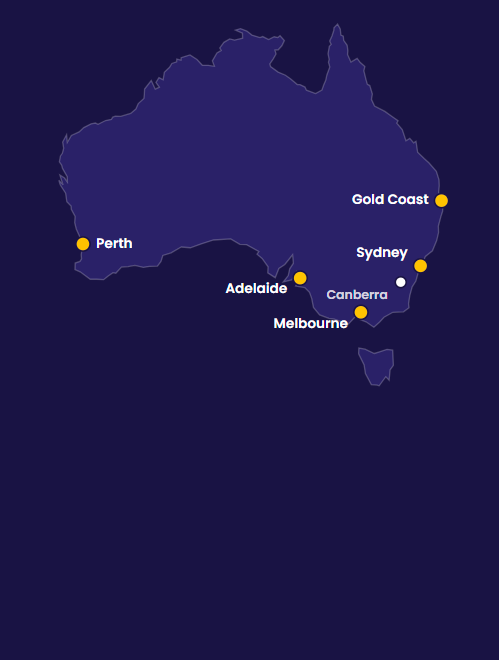
At Enliven Housing, we have SDA all throughout NSW, VIC, ACT, WA, SA and QLD. If you’re curious to see what options are available to you, feel free to reach out to a friendly team.
SDA Price Guide: Number of Residents
SDA pricing can vary depending on the number of participants within the home. The SDA Pricing Arrangement outlines the pricing for a range of occupancy options for example, single or shared. SDA pricing is generally higher when fewer residents share a home. This reflects the greater cost of providing individualised housing and support in smaller settings.
SDA Pricing: Onsite Overnight Assistance
The SDA Pricing Arrangements set different price limits depending on whether a home includes Onsite Overnight Assistance (OOA). OOA is flexible support, provided by a worker who stays overnight in a separate room within the home building.
SDA with an OOA room will have a higher cost compared to those without. The SDA cost will also vary depending on the building and whether the support is shared with other dwellings. For example, apartments with OOA tend to have a higher SDA cost compared to houses or villas.
ResidentsSingle or shared
Number of Residents
●SDA pricing can vary depending on the number of participants within the home.
●SDA pricing is generally higher when fewer residents share a home.
●This reflects the greater cost of providing individualised housing and support in smaller settings.
OOAOvernight support
Onsite Overnight Assistance
●SDA with an OOA room will have a higher cost compared to those without.
●The SDA cost will also vary depending on the building and whether the support is shared with other dwellings.
●Apartments with OOA tend to have a higher SDA cost compared to houses or villas.
How much does the NDIS pay providers for SDA?
The amount the NDIS pays your provider for the home, the SDA price limit, varies widely. It depends on the design category, the dwelling type, the number of residents, the location and whether the home has Onsite Overnight Assistance. As a rough guide, a shared, lower-category home in a metro area sits at the lower end, while a single-occupant High Physical Support apartment with Onsite Overnight Assistance sits at the top end.
At the lower end
✓A shared home
✓Lower-category
✓In a metro area
At the top end
✓Single-occupant
✓High Physical Support
✓An apartment
✓With Onsite Overnight Assistance
Exact price limits are set out in the NDIS SDA Pricing Arrangements and updated each year.
How do SDA Payments Work?
Your SDA provider will collect payments directly from the NDIS through the NDIS Participant Portal. This portal keeps track of your funding and shows any payment requests made by your provider. The whole process is automated, so you don’t need to do anything.
The SDA funding from the NDIS covers things like the building itself and its upkeep. However, you’re still expected to contribute a small amount towards rent. This is called a Reasonable Rent Contribution (RRC) and it’s paid directly by you to your SDA provider. The SDA Pricing Arrangements set a cap on this amount.
SDA funding has two parts, and it helps to separate them. The NDIS pays your provider for the home. You pay a smaller amount towards rent, called the Reasonable Rent Contribution (RRC). For most people, the RRC is the only SDA cost they pay directly, so it is the figure most people need to budget for.
Your RRC is capped at 25% of your Disability Support Pension, plus 25% of your Pension Supplement, plus 100% of your Commonwealth Rent Assistance.
Your reasonable rent contribution
With Enliven Housing, capped at the following
25%
of your Disability Support Pension
25%
of your Pension Supplement
100%
of Commonwealth Rent Assistance or equivalent
How does Enliven Support SDA Participants
We know that navigating SDA, including understanding your funding and how the SDA Pricing Arrangements work, can feel overwhelming. That’s why our team is here to guide you every step of the way, as shown through the experience of Jacob, one of our tenants:
“The team at Enliven have been incredibly supportive in my journey accessing NDIS SDA and the processes involved to enable me to achieve one of my goals to live on my own”
Whether it’s breaking down the SDA price limits or understanding the processes, we’re committed to making the process clearer, simpler and more empowering.
Tenant Stories
Why I’m glad I chose Enliven
Learn how Enliven Housing’s Improved Liveability apartments have empowered residents to build their confidence and independence.
Choose Australia’s Most Trusted SDA Housing Provider
Understanding the SDA Pricing Arrangements can make a big difference when planning your next steps. Whether you’re already an NDIS participant or just starting to explore your options, we’re here to help. A great first step is to explore our SDA Guide or try our SDA Eligibility Calculator to see what may apply to you.
A rent contribution you can count on
Your RRC is capped and transparent, so you know what you will pay, with no hidden fees on top of your contribution.
We help you understand your funding
Our team breaks down your price limit and rent contribution in plain terms, so you understand your costs before you move in.
Homes across categories and budgets
Blended homes in metro and regional areas across the country, so there are options that suit your funding.
We partner with trusted providers
We work with reputable Support Providers who share our commitment to quality, stability and better living outcomes.
Important
Want to know more about your eligibility?
Try our SDA eligibility calculator, or read our guide to SDA funding.
There’s no single set amount the NDIS pays for SDA. The amount varies depending on factors such as the SDA design category, the type of home (such as an apartment, villa or house), its location and the number of residents. The NDIS SDA price limits set out the maximum annual amount payable per person based on these factors.
How much will I pay in rent for an SDA home?
You pay a Reasonable Rent Contribution, capped at 25% of your Disability Support Pension, 25% of your Pension Supplement and 100% of your Commonwealth Rent Assistance. For most people this is the only SDA cost they pay directly. Use our calculator for a personalised estimate.
What does SDA funding pay for?
SDA funding pays for the home, including the building, its accessible design features and its maintenance. Support workers and personal care are funded separately.
When do SDA prices change?
SDA price limits are usually updated by the NDIA each year from 1 July. The pension and rent assistance rates that set your contribution are indexed in March and September.